Evan Meagher examines why familiar analogies help explain difficult subjects and why they can also narrow the explanation. He uses voltage compared with water pressure as a useful teaching example, while noting that every abstraction removes information.
The article focuses on the claim that consciousness is computation performed by the brain. Neurons communicate through electrical and chemical signals in response to stimuli, and modern computing systems emulate these processes to great effect. Calling the brain a computer can become circular because the model describes the territory with a map whose limits remain unclear.
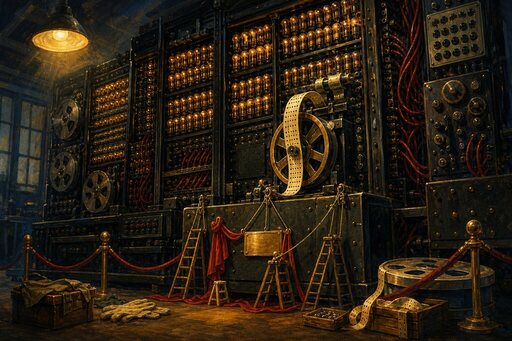
Earlier eras used their leading technologies in the same role. People compared the brain with telegraph networks and clockwork mechanisms. In the 17th century, René Descartes also used clocks, machines, hydraulics and fluid motion to discuss parts of brain function. Meagher sees this sequence as evidence that science and technology develop together, and as a warning that the computer model may prove as partial as the older ones.



Comments
No comments yet — be the first.
Open the discussion
No account or password needed — just enter your e-mail and we’ll send you a one-time sign-in link. First time here? You’re set up automatically.
Your rating will be applied automatically after you sign in.
Check your inbox
We’ve sent a sign-in link to …. Open it on this device — this tab will sign you in automatically.
Nothing arrived? Check your spam folder — and mark the mail as "Not spam" so it lands in your inbox next time.