In 1941, British radio operators intercepted a new kind of German signal: high-speed binary teletype code, far more advanced than Enigma traffic. The machine behind it — built by Berlin firm C. Lorenz and codenamed "Tunny" by the British — was used by the German Armed Forces High Command to communicate with front-line generals, with messages sometimes signed by Hitler himself.
Breaking Tunny began with a lucky break: two near-identical intercepted messages of about 1,200 characters let Bletchley Park's John Tiltman decrypt them, and young codebreaker Bill Tutte deduced the machine's 12-wheel construction from the resulting ciphertext-plaintext pairings. Alan Turing then devised "Turingery," based on a bit-level differencing technique called delta-ing, which let codebreakers recover wheel pin settings from ciphertext alone — good for 1.5 million decrypted letters in a year. But when German operators stopped sending wheel-setting clues in plaintext and tightened procedures, a faster approach was needed.
Tutte developed a statistical method requiring enormous amounts of binary counting — months per message by hand. Engineer Tommy Flowers, on loan from the Post Office Research Station, proposed an all-electronic machine with around 2,000 vacuum tubes. Bletchley Park's advisors rejected the design as unworkable, believing tubes too unreliable at that scale. Flowers built it anyway in his London lab over 10 months, having discovered that tubes left continuously powered were more reliable than relays.
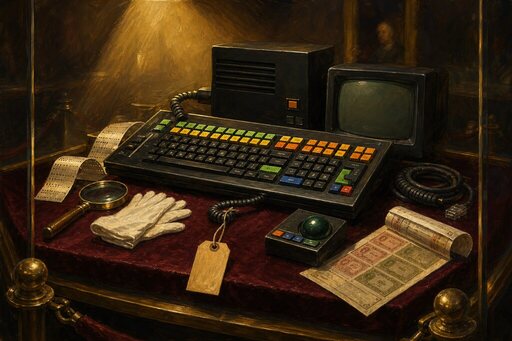
Colossus arrived at Bletchley Park in January 1944 and decrypted its first message on 5 February 1944. It read ciphertext photoelectrically from punched paper tape loops and printed results via a relay-automated typewriter. Colossus II, completed days before D-Day in June 1944, ran with 2,400 tubes at 25,000 characters per second — a timing-pulse rate approaching that of Intel's first microprocessor over 30 years later. Flowers noted the machine embodied features of modern computers: clock pulses, shift registers, interrupts, loops, counters, and parallel processing.
By war's end, ten Colossi ran day and night in two bombproof buildings at Bletchley Park — the world's first electronic computing facility, directed by Max Newman. Intelligence from Tunny gave the Allies an unparalleled view of German strategy; if it shortened the war by even six months, millions of lives were saved. After the war, all but two machines were destroyed under secrecy orders, leaving, as operator Dorothy Du Boisson recalled, only holes in the floor.
IEEE is now commemorating Colossus as an IEEE Milestone, with a dedication ceremony on 29 September at Bletchley Park. The plaque, placed outside Block H, honors the six Colossi that operated there in 1944–45 and recognizes Colossus as the first successful large-scale application of digital electronics to computing.
Comments
No comments yet — be the first.
Open the discussion
No account or password needed — just enter your e-mail and we’ll send you a one-time sign-in link. First time here? You’re set up automatically.
Your rating will be applied automatically after you sign in.
Check your inbox
We’ve sent a sign-in link to …. Open it on this device — this tab will sign you in automatically.
Nothing arrived? Check your spam folder — and mark the mail as "Not spam" so it lands in your inbox next time.